Morepen Laboratories Ltd
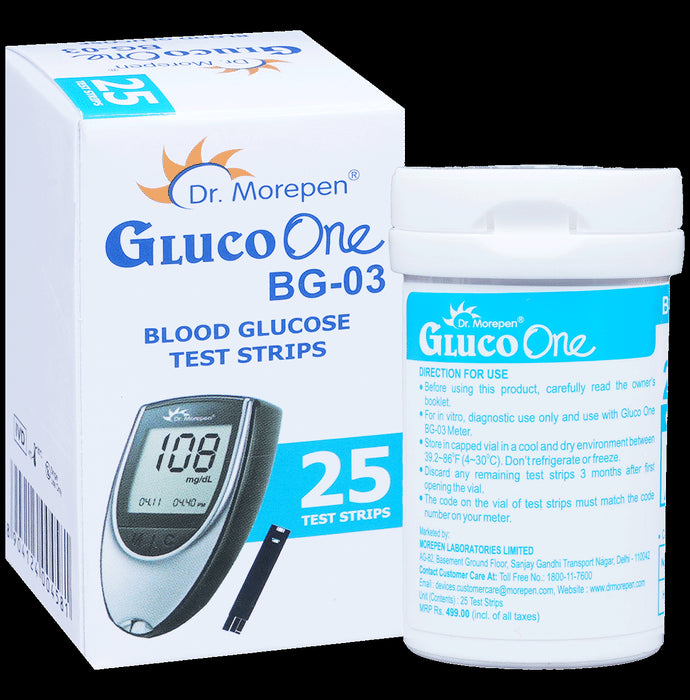
Dr Morepen Gluco One BG 03 Blood Glucose Test Strip (Only Strips) | Diabetes Monitoring Devices
Dr Morepen Gluco One BG 03 Blood Glucose Test Strip (Only Strips) | Diabetes Monitoring Devices
Couldn't load pickup availability
Dr Morepen Gluco One BG 03 Blood Glucose Test Strip (Only Strips) / Diabetes Monitoring DevicesThese test strips help to measure the concentration of glucose in the blood. It is a reliable and convenient self-testing method with a blood glucose monitor. It helps to provide quick and reliable results in the comfort of your place. It can be used for both professional (at clinics) and personal (at home) use. It is effortless to use. Uses:It helps to regulate blood glucose levels.Product Specifications and Features:Product Dimensions: 3.7 x 3.6 x 6.4 cm; 26 gmContent: Test strips, no glucometer device, strips in a box intended for single, one-time useMinimum blood sample needed: 0.5 microlitresProvides information on how the program affects the blood glucose levelIt helps to test blood glucose frequently, which in turn allows for keeping blood sugar levels in controlRequires only a tiny drop of blood for the testIt helps monitor glucose levels at any time and anywhereIt can be used to keep a regular tab on the sugar levels at homeCompatible with: Gluco One BG-03 glucose meterDirections for Use:The first step is to wash hands with soap and waterPat dry them with a towelAn alcohol swab can be used to clean the finger before testing but ensure the fingertip is completely dry before testRemove the test strip from the box of stripsInsert it into the slot on the glucometer just before pricking the fingerNext, use a clean lancet (a device that holds the needle) or insert a clean needle in the lancet, which can help prick the finger's endPrick the side of the fingertip and wait till blood oozes outWipe off the first drop gently, and then put a drop or two onto the designated place on a test strip attached to the glucometerHold a clean cotton pad or gauze on the prick site to stop blood flowApply pressure on the area of the insertion until the bleeding stopsThe blood glucose level will appear on the meter’s displayNote down the readings as it helps monitor glucose levels from time to timeRepeat this procedure every time to test the blood glucose levelSafety Information:Read the manual/instruction leaflet carefully before useStore in a cool and dry place, away from sunlightKeep out of reach of childrenEach strip is for single use onlyDispose of the used strips properlyQuick Tips:For in-vitro diagnostic use, onlyStore in a capped vial in a cool and dry space between 4-30 degrees CelsiusDiscard any remaining test strips three months after the first opening of the vialDo not make any medical decisions without consulting a doctorAlways discuss the results with a registered medical practitionerIt is wise to check the test strips before use carefully for better resultsAlways check the expiry date on the test strips and lancets before buying. This is because the use of outdated strips can give incorrect readings and thus, serve no purposeDo wash your hands thoroughly with an antiseptic hand wash before the testFrequently Asked Questions:Q. Can blood sugar strips be reused?No. All the blood glucose test strips are for single use only. Do not reuse a test strip, as it may not provide the appropriate results. It is strongly advised always to discard a test strip after every use. Q. What are the benefits of glucometers?It is well known that testing blood glucose levels with a glucometer at home is one of the best ways to regulate blood sugar levels. It can help to test blood glucose at any time of the day and anywhere. Using a portable glucometer is the best way to test glucose when travelling. Charting blood glucose levels becomes easy with glucometers, especially with devices with memory options to store previous readings. By helping to check blood glucose, blood glucose monitors can help manage blood glucose levels. Q. What is a normal glucometer reading?According to the American Diabetes Association, the fasting or preprandial blood glucose levels for diabetics should be between 80 – 130 mg/dl, and postprandial (1-2 hours after meals) should be less than 180 mg/dl. However, the range mentioned in the glucose monitor may be a little different. So, speak to the doctor to calibrate the results with the lab reports.Q. How do blood glucose monitors work?Diabetes devices or glucometers test the amount of glucose in the blood. The test strips in glucometers contain an enzyme glucose oxidase, which reacts with glucose in the blood and sends the result as an electronic signal displayed on the monitor.Q. How often blood glucose levels should be tested with a glucometer?In the case of type 1 diabetes, check the blood glucose levels several times a day, such as pre and post-meals and before and after exercise or as advised by the doctor. Whereas, in the case of type 2 diabetes, monitoring the sugar levels might be based on the severity of the condition, which can be several times a day, once a day, or thrice a week. Hence, talk to the doctor about how often blood glucose levels should be tested.
Composition :
Share